The Journey: We Awoke to Find Planes Bombing Above Us
Our life was very good. We were very comfortable and happy.
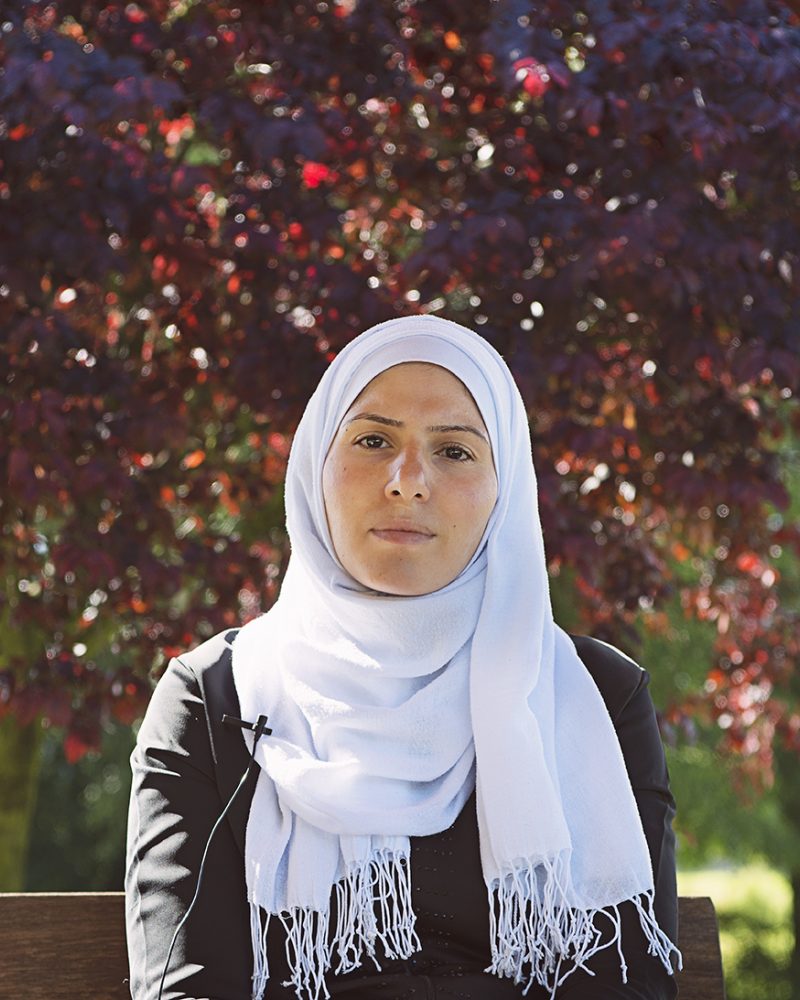
Our life was very good. We were very comfortable and happy. Then we slept and awoke to find the planes bombing above us. The war had begun where we were. [The bombs] demolished our house and my uncle’s house. My uncle died in the attack. So we left for Turkey.
In Turkey my husband began working, but they didn’t pay him for his work. We began to go hungry. My husband left before I did because we didn’t have the money to leave with him. After a while my children and I left, and I also brought my husband’s young brother with me. I was five months pregnant. I suffered a lot on the way.
We came by sea, and the smugglers left us on a deserted island. We took off our life jackets and set them on fire to get warm. My children suffered with me. They were exhausted. They even got sick in their chests from the cold winds. We begged passing fishermen to rescue us. When we paid them money, they took us off the island.
I gave birth in a refugee camp and remained there for two months. I kept asking that they bring me, my husband, and my children back together.
For months they told me, “You need to wait in court.” In the end they sent me to a house where many other women and their children lived. I have one room for me and [my family].
My husband and I are in the same country but in different cities. In the city where he is, my husband had his younger sister with him. When they saw her not laughing in school and looking sad, they took her away from my husband. Now she lives far from him and is much more sad, so sad she won’t eat. She wants to live with her brother, but they won’t let her.
We came from being under attack, and we still feel alienated here. We wish that after all this, our family will be back together for the sake of all these children.
Our team members obtain informed consent from each individual before an interview takes place. Individuals dictate where their stories may be shared and what personal information they wish to keep private. In situations where the individual is at risk and/or wishes to remain anonymous, alias names are used and other identifying information is removed from interviews immediately after they are received by TSOS. We have also committed not to use refugee images or stories for fundraising purposes without explicit permission. Our top priority is to protect and honor the wishes of our interview subjects.