There Was a Collective Grief
Many Afghan evacuees didn't know what their next step was.
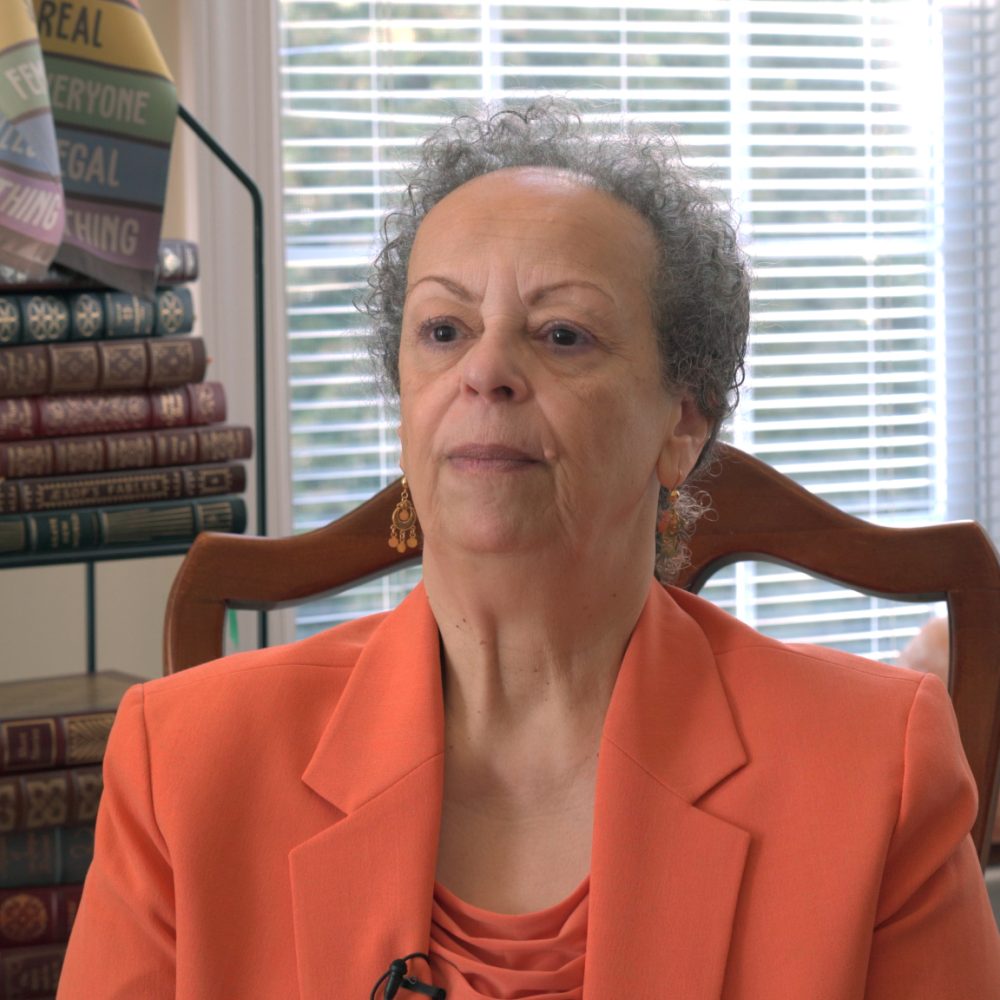
My name is Sahar Taman. I’m originally from Egypt but I came to the United States 55 years ago, as a child with my parents. I still think of myself as an immigrant, and an American.
I am an immigration attorney by profession now. I went to law school when I was 56 years old. It was a good decision. Right now, the field of law I chose is a very challenging one. At some point in my life, I don’t want to have so many challenges, but we don’t always get to decide. So I feel very honored to be doing this work, and I’m also very worried at this time.
I ended up plugged into the Afghan evacuation from Afghanistan by the U.S. military in 2021, which was called Operation Allies Welcome. I happened to be in Wisconsin. We heard that thousands of people were going to be coming to Fort McCoy army base, which is about an hour and a half from where I lived. And I knew, they’re not coming with whatever proper immigration status is required. They’re just putting people on a plane. I met many of those people who were outside the Kabul airport the day of the bombing on August 16, 2021. Hundreds of Afghans were killed and also 13 American soldiers.
So I said to myself, “They’re going to need legal help.” I had just graduated from law school. So I called the crisis responders at Fort McCoy. It was a refugee camp.
We might not have wanted to admit that, but there were times during the five and a half months that I was there that I felt like it was a refugee camp. It could have been in any other country.
That experience changed my life. There were 12,500 or more Afghan guests. There were also troops, staff, volunteers, and contractors dispatched from many American government entities. Different branches of the Department of Defense, the Coast Guard, the Department of State. There were international organizations like IOM (International Organization for Migration), the International Rescue Committee (IRC). Fort McCoy Army Base was one of eight “safe havens” for the 80,000 or so Afghans that were evacuated. Some of them were military bases and some of them were more like pop-up bases.
At Fort McCoy, the Afghan guests stayed in barracks. These were open barracks. Some people had put up sheets so they could have separate rooms. But some of these families were very large. Single people were in their separate barracks. There were kids everywhere. It was so beautiful. But there were no facilities. Kids were making swings out of sheets. The U.S. government, the military, and the international organizations who were there dealing with the situation responded as best as they could.
National immigration policy at the time also had to adjust. There’s a program for Afghans called the Special Immigrant Visa. The visa application and interview is usually done abroad. We had to learn how to do it within the United States. In the beginning, it wasn’t quite clear how the evacuees were going to get legal status. Typically, the United States has an asylum process for people who are already here and claim fear of returning to their country. Generally, you don’t get tens of thousands of people at a time doing that. The sister equivalent of the asylum process is a refugee program, where people are outside the United States, often they are in camps run by the United Nations. They are also claiming fear of returning to their country.
Here, at Fort McCoy, we had 12,000 people. The legal clinic was a cement floor. People came and we responded by giving information. Who’s eligible for asylum, what the asylum law is, which claims does a person need to make - that I cannot return to my country because of fear of persecution because of my political opinion, my religious beliefs, or non-religious beliefs. And there are several other bases for asylum claims. I felt we had a responsibility to provide legal information. So we would have a variety of orientation sessions - SIV, asylum, and even family options, because some people did have family here. We would have these presentations multiple times a day.
The Afghan guests ranged from people who had done some type of work that was democracy building, women’s development, and interfaced with the American government or international governments, or the military. Not all of these people were interpreters who had assisted the military. What I learned is that for 20 years the United States was engaged in developing the entire country. That was the plan, that was the hope. So there was a variety of people, working with the government, civil servants, teachers, civil activists. They were plugged into making their society grow, just like we do. And all those people that were passionate about things were in danger if they returned to Afghanistan. All of them.
Many of those people really didn't know what their next step was.
When we first did the presentations, our legal clinic was a little bit further away, it was just a trailer. It was cold. We were like, “Is anyone going to come?” And then we would open the door and there would be 70 or 80 people. People would be sitting on the floor. At the end of the sessions, we just started saying, “How many people feel this is useful for them?”, and all the guests would always raise their hands. It was like, “Okay, we’re doing the right thing.”
During that time, we had four attorneys who were on staff, and we needed a lot more attorneys. The staff person who was coordinating the legal clinic brought 70 volunteer attorneys from all over the U.S. to volunteer. These were amazing people. Almost all of them had immigration experience. Some would stay for two weeks. Some would come for a couple of days.
It would just be so many Afghans coming and asking the same questions. It starts with, “All my passports are in my suitcase and I don’t know where that is.” We could explain to them what you would do for immigration, even if you didn’t have a passport.
I realized some of these people are professionals, and they were so frustrated, they wanted to do something themselves and assist. So we’d say, “Okay, come and help us.” We ended up having 90 volunteers from the Afghan guests who all spoke English.
One of the things I learned is most Afghans who have any education are already bilingual, because Afghanistan has two official languages. So they were really helpful. They had master’s degrees, MBAs. People would come and say, “I’m a licensed attorney.” Another person would say, “I’m a student.” Their function wasn’t just interpretation. Their function was legal assistant.
Really a touching and moving experience. I'm still in contact with many of these Afghans. They helped me and I learned a lot from them.
At some point, we changed what we were doing because legal information was not enough. We said, “Why can’t we hands-on help people with these processes? Not guiding them through the form, but say, What happened to you? Why did you leave your country?” That’s the biggest part of an asylum application. And it was a big decision, because in asylum, immigration work, trauma is a big factor. People have experienced some type of persecution, or they’re really, really afraid something’s going to happen if they go back, or they’re afraid for family members who are there.
The Afghan guests would be remembering this trauma because it was actually an ongoing, current trauma, and they would start crying. But also, people stood up and said, “I want to tell you, this is what happened to me.” And they were so honest. People would describe torture. The others who were there would agree, and I realized it was a collective trauma.
There was a collective grief.
The Afghans could agree with each other even though they had different stories. Many of them were from the city of Kabul and they had some kind of professional work. It was a democratization process. That meant women with men putting clinics on the ground, doing vaccination projects. But there were also people from the provinces of Afghanistan that had a very different experience. These people, for 20 years and plus, had lived through a violence in their hometowns that was just raining down upon them.
There’s a very complex history in Afghanistan that I cannot fully understand. There is a very complex political experience that also happened which I cannot fully understand. I saw what the outcome is to the individuals who felt they just had to get on a plane. And since then, there are others who couldn’t make that plane and who have come into the United States in a variety of other ways, including coming across the southern border. And some of those people are my clients.
I’d like to take a minute to talk about what people’s expectations were of the new immigrants, of the new guests. There was a lot of expectation that these were disenfranchised, disadvantaged people. Modern society was going to be new to them. I think that changed. We learned somebody’s story. It was very impressive. So a lot of the law students or volunteer attorneys that came – their lives were changed. I saw transformation.
I will be very honest with you, that was not the case for everyone. Some of the individuals from the American government were not prepared for this. There were people who were dispatched, who didn’t have the empathy or the compassion or the knowledge, or weren’t even trying to create cultural respect. And I saw a lot of that. I am sorry that happened and the Afghan guests were hurt.
The goal at Fort McCoy was to resettle the Afghans to other places in the United States. After the Fort McCoy safe haven closed, I realized it was a legal crisis. So one of the four attorneys and I worked with a resettlement agency in Virginia. We did 12 two-day asylum workshops. We would have 50 people come in at a time and about 4500 Afghans applied for asylum. We would find people with language skills because there’s a large Afghan diaspora here already. We had hundreds of community volunteers.
Resources were an issue. Most people came without a laptop or without a phone. So the volunteers brought their laptop and would write a long narrative, usually. We had created a template. Initially, people would be coming in and saying, “Why am I here?” At the end of the two days, they said, “Thank you. We got this done.” And they’re also having this chance to tell their story on paper, which is a really big thing. Telling your story to another person is something, but seeing it on paper. There is a huge sense of relief that they’ve been heard.
Oftentimes, nobody actually knows the whole story. They've never been able to tell their family, to protect them. They've never shared.
It’s always been inside, and I get a sense that there’s a huge sense of, “I’m relieved that I’ve been able to share, but I’m also relieved that I’m still here.”
Immigration law is constantly changing, we’re always adapting to that. Immigration is a step-by-step process. People were granted asylum. Part of the asylum process is petitioning for their immediate relatives. There’s a lot of family retribution by the Taliban. So these families were also in need of asylum. Then after time passed by, there was an opportunity for people to start applying for permanent residency. And that’s a different set of standards. We have a complex immigration system but it’s also quite logical.
And then during that time, there were many Afghans who didn’t get on the planes. Some of them were people who would have come through the SIV process anyway, and some of them were people who just had to leave. These were people that often crossed into the United States through the border. So they would come here to a country in South America. And sometimes the journey was not just through Central America, it was from Brazil, Dominica. One time, my client walked me through every step of the way. It took four hours for them to explain. They would find corrupt officials, corrupt police. People were kidnapped by the mafia. It’s very complicated.
So I learned those stories, and then once they were here, that’s a very different process. You have entered the country without admission or parole. There’s a concept of illegal that’s being thrown around. Most immigration offenses are civil violations. You probably should have gone through another path, but sometimes there are no other paths. With immigration, you are bringing someone before the court, and what has that person done wrong? The only thing we can say is they crossed into the United States, or they stayed in the United States, and you are prosecuting a person who has not committed a criminal act.
They're saying, “I haven't really done anything wrong except run from a place I couldn't stay.”
Now you have to defend yourself in immigration court. Things have changed with that. I would say, in the last year, we are no longer working with a prosecutor that is looking at application of the law with neutrality, professionalism. We are just seeing prosecutors who are, for any reason, going to oppose.
All asylum applications take years. Most of my clients are asylum seekers. Some clients also have other options. They have a brother or spouse who has petitioned for them, and they may even have that petition approved. That’s also a long process. There are quotas and each year only a certain amount is allocated.
When I hear what my clients have gone through, I just ask myself, “Could I have done that?” The same trauma would have made me fall apart. And I’ll talk with people, and we’re laughing, and they’re going about trying to figure out how to get a driving license, and put their kids in school, and figuring out what they should be doing to help them in the school. Life. Learning about new things. There’s so many wonderful things about living in the United States. There’s so many opportunities. And then every once in a while, they will say, “Oh, yeah, this happened to me. Yeah, I was in jail for a few months. I wasn’t treated well. I was tortured.”
My work has taught me that I have everything, especially safety.
It’s putting myself in someone else’s shoes. It puts me back in my place to be grateful. We really shouldn’t have people having to leave their country in terror and fear. And the truth is, if you ask most people, they will say, “I didn’t want to leave my country. I had everything there”. The huge sense of loss. I learned that I have everything. I mean, just the fact that I’m waking up one morning and my concerns are first-world concerns. That’s why I do this work.
Our team members obtain informed consent from each individual before an interview takes place. Individuals dictate where their stories may be shared and what personal information they wish to keep private. In situations where the individual is at risk and/or wishes to remain anonymous, alias names are used and other identifying information is removed from interviews immediately after they are received by TSOS. We have also committed not to use refugee images or stories for fundraising purposes without explicit permission. Our top priority is to protect and honor the wishes of our interview subjects.
