My Dream Is To Go To Medical School
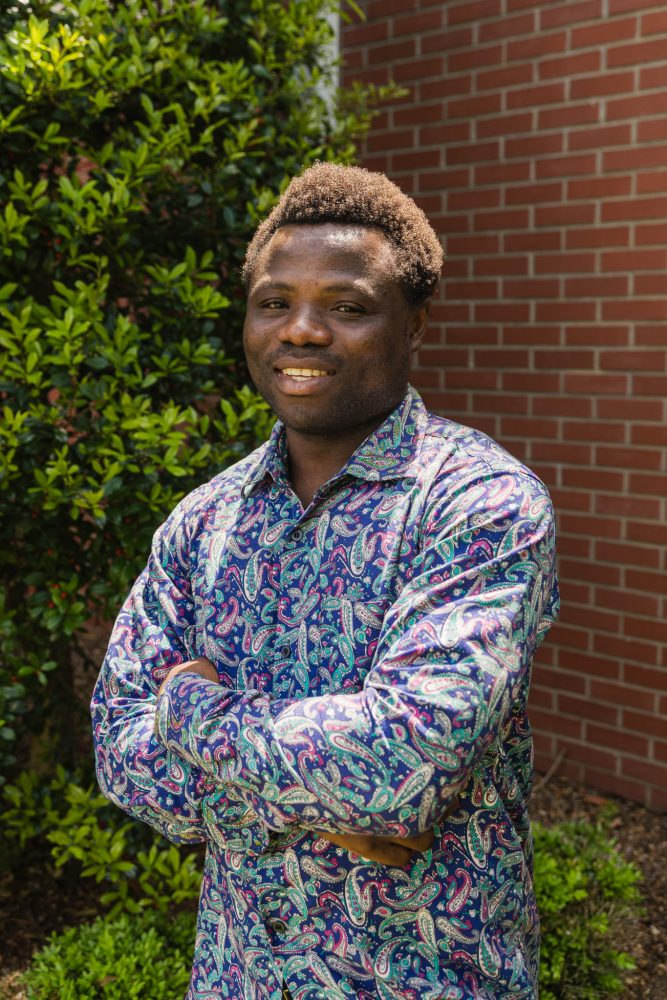
My name is Yamungu Bakary and I’m a refugee from Tanzania. I was born in the Nyarugusu refugee camp.
My family is originally from Congo. There was a war in Congo and so they ran to Tanzania and lived in the refugee camp. I was born there in 2002, and lived there until I was 15 years old, when I transferred to the United States. There are eight children in my family. Seven of us were born in the camp.
Life in the camp wasn’t good at all. We lacked a lot of stuff. The education wasn’t good. Even the hospital system wasn’t good. It was really bad. So we grew up just by the grace of God.
We did try to have fun. My friends and I sometimes went to the river stream there and played in the mud. We played a lot of soccer too.
I came to the US in 2018. We came straight to Bowling Green, Kentucky, through the UNHCR. My uncle came here before us, so we already had some family here. There’s also another organization called the International Center of Kentucky. They helped us, especially us kids. They helped us enroll in school. School wasn’t that easy for me because I didn’t speak English, and I had to learn a new language.
I was very isolated, and didn’t have as much fun as the other kids. That was the hardest thing–to learn a new language and to make friends.
I had ESL classes through the school. The teachers helped me a lot, and my cousins helped me too. They gave me books and shared some links where I could teach myself how to learn and study.
When I was in high school I had a conversation with my parents about going to college. I called them together, like a meeting. I said I want to go to school and they told me okay, but we don’t have enough money to pay for you. So we don’t know how we are going to help you. And I said, okay, but I will try my best. I asked my teacher if there’s any way I could get a scholarship. I had a high GPA when I graduated so I was able to apply for some scholarships here at Western Kentucky University. And that’s why I came here, because they do some scholarships here.
Here on campus there are places I can go when I need help, like, for example, the writing center. If I’m stuck on something I usually go there and they can help me. I’ve also been able to make some friends here.
Sometimes I feel disconnected from my homeland, but other times, I don’t.
Sometimes my parents start telling us about what they used to do. And I always think, “Oh I need to go visit this place.” Life isn’t good at all over there but I’d still like to visit.
My best memory of the refugee camp was when they told us we were going to the United States. For us, it is like reaching heaven. My parents told me that I would have the opportunity to have a good education, and so I am working hard in school. I am a bio major. My dream is to go to medical school, God willing. I’d like to do general surgery or maybe be an orthopedic surgeon. I want to pursue medicine because maybe one day, God willing, I can go and change the healthcare system in the Congo or help other kids who grew up in the same situation as I did. I’d like to provide education or health care in the camps. I think I can do both!
I help other newcomers like me right now by helping them translate some things. I speak Swahili, Bembei, a little bit of French, and English.
But I would tell anybody who is coming to avoid bad friends. And don’t take opportunities for granted. Work for those opportunities, and dream big.
Our team members obtain informed consent from each individual before an interview takes place. Individuals dictate where their stories may be shared and what personal information they wish to keep private. In situations where the individual is at risk and/or wishes to remain anonymous, alias names are used and other identifying information is removed from interviews immediately after they are received by TSOS. We have also committed not to use refugee images or stories for fundraising purposes without explicit permission. Our top priority is to protect and honor the wishes of our interview subjects.
