It’s Just an Honor
Helping people released from the Northwest Detention Center
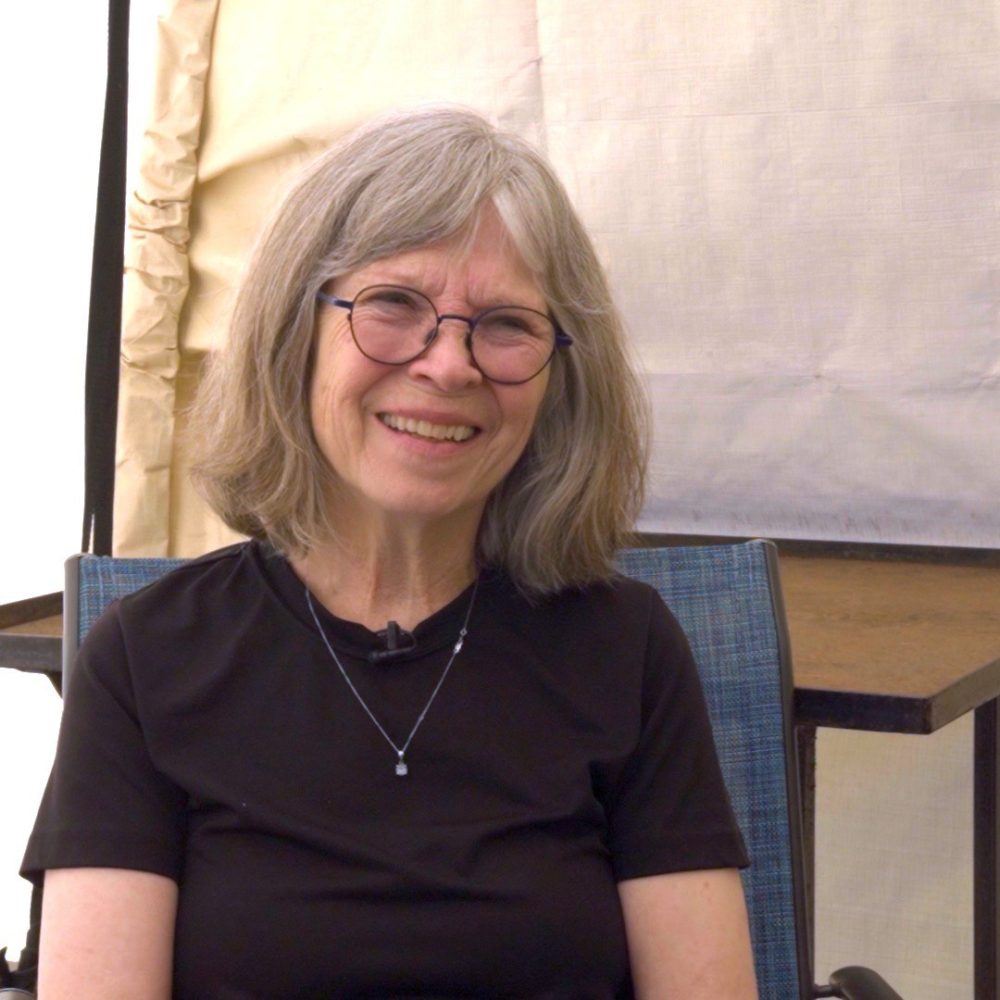
My name is Kristine Stroad Moore. I’ve been an AID Northwest (AIDNW) volunteer since 2018. I volunteer at the Welcome Center and also with marketing and communications. I’ve lived overseas extensively, so I have some idea what it’s like to have people help me all over the world.
At AID Northwest, we have several important programs. The Welcome Center is our stationary trailer and two tents outside the release gate of the Northwest ICE Processing Center (detention center in Tacoma, WA). We have volunteers here every week night of the year, waiting for people to be released.
They were taken from all over the country. So, one of the big things we do is travel planning. People get put in one detention center and then moved to another, and then to another. They have often been in there for months. We give them phones to contact their relatives and work with their relatives to plan travel.
At the Welcome Center, we give them backpacks because they’re released with everything they own in a clear plastic bag. We give a lot of coats in the winter. They may have been taken in the summer or in another climate, often Florida. They might be wearing flip flops or even pajamas, so we give a lot of clothes and shoes. We try to have enough on hand so they have some choice.
Clothing is really important for restoring dignity.
We have volunteer drivers who are trained to get their guests through airport security. The only ID that most of our guests have says “ICE” in huge letters at the top. Sometimes, the TSA (Transportation Security Administration) officer may be familiar with that. Oftentimes, they have to call a supervisor and there’s a lengthy delay. But our volunteers are trained for that and they go all the way through security with them. We also give them a paper with their flight information so if they have problems they can ask for help.
We also have a visitation program where people inside are matched with a volunteer who agrees to visit them at least twice a month. We have pen pals who can write to them. We’re a small nonprofit. We have only one paid staff person, and we operate almost 100% on donations, many of them small. But we’re able to give at least $2,000 a month in $20 phone cards. These phone cards are the only way for people inside to contact their families for legal assistance. Last month, I think we had $5000. When we only have $2000 to give, it’s the first 100 people who call into our hotline who get it, and the rest are put on a waiting list.
We have always tried very hard to be diplomatic, to not publicly say what some of us privately may be thinking about conditions inside. Because of this, we have a good working relationship with ICE. ICE and GEO [private company that owns and runs the Northwest ICE Processing Center] and the city of Tacoma, they like us here because we’re in the middle of an industrial zone. There’s no phone or bus or store within a mile, and if they just released people, they would be wandering around.
So they appreciate the service that we offer. It can vary depending on staffing, but we have a remarkably good relationship with the current ICE supervisor and staff. Today, they even called us to let us know that there were two people about to be released and they wanted to make sure we were here. A couple of weeks ago, they called to say that someone would be released who had limited English and no means of paying for an air ticket. They gave us that heads up in advance.
The other really big thing for us is that we can contact them in the late afternoon, after immigration court is over, and say, “Will there be any other people released?”, and then we know we can go home. That’s really important in the winter when we’re down here in this tent, huddled around the heater, or it’s raining. If we aren’t able to make that connection with ICE, we can walk into the detention center entrance and talk to GEO staff at the front desk. They will not know, but they will call ICE for us. Some nights no one is released, and other nights we’ve had as many as 25 people being released.
That cordial relationship with ICE also allows us to have a book and puzzle donation program, which is a way to help the people inside pass the time. We have volunteers scouring the libraries and bookstores, especially for languages other than English.
To greet somebody who’s just been released, we have our different styles. When I see someone come to the gate, I don’t rush up, because I feel like this is their first moment of freedom, give them a minute. But then I stand back and I cheer, and I go, “Yay! Congratulations.” And usually their face will just light up. [Kristine tears up] It is such an honor to be the first people to greet them, show respect, appreciation for who they are, and to be able to help them to get to where they need to go. And talking with their families, the reunions we see down here. A lot of people have traveled hundreds of miles because they knew their loved one was going to be released, which is really joyous.
There was a group of seven women who had been picked up in Baltimore, and they were all released at the same time. None of them could afford plane tickets. But our operations manager has a few people he can call and within two hours [Kristine gets very emotional] they all had their tickets. And then there were no good flights to Baltimore but we found ones to Dulles. That’s a heck of a distance but they found volunteers who were willing to come and pick them up at Dulles.
It’s just an honor, and it's such practical help. It feels really satisfying to get somebody going to where they need to go.
We volunteers all have our niches. I could not do visitation. I would burst into tears. But this, I can do. I’ve lived all over the world. Sometimes I can reminisce with somebody from Georgia about how gorgeous the bread is in a certain town or something like that, and that’s really extra special. A man from Bangladesh was released and I said, “Are you from Dhaka?” And he was surprised that I knew the name of the capital city.
I lived out of the country for 10 years, in seven countries, so I feel like a citizen of the world. I feel like I have some sliver of understanding of what people in detention may have experienced, what their former lives may have been like. And the incredible lengths that people will go to to find a safer place to live is something that really moves me.
We try to keep minimal data. All we ask is to see their ID and write down basic travel information, in case a loved one calls us and asks, “What happened to my person?”.
We write nightly reports. We keep track of how many backpacks we give and how many rides. At the end of the month, all of those reports are collated, and I’m the one who gets to go through and pick out vignettes to appear in our newsletter. It’s interesting for our donors and volunteers to hear little bits about the treatment someone had in there, how long they were in there, where they are from and where they are going, the numbers of people served.
We have seen an increase in the number of people who are unable to purchase a ticket, so donations toward that are really wonderful, and we always need many backpacks and coats. Another thing we need are Tracfones [prepaid cell phones]. Also portable battery packs for people who did have a phone on them when they were picked up and the battery is dead. We always keep shoelaces on hand because those are taken away. We have started giving out shoes.
Those who have no cash, which is probably a majority, we give $20 for food at the airport. A lot of flights are often cheaper in the morning, so we’ll often choose ones that mean they have to spend the night at the airport.
I wish people knew how unfair and unjust detention is.
People being picked up for no credible reason. And people don’t know that detainees are shuffled from one place to another, in shackles, often in the middle of the night. I wish people knew about the sheer number of deportations. Families have been broken up, the breadwinner has been deported to another country. What does that do to the children? The conditions inside, that’s another thing. And they have no real path to citizenship. We keep changing the rules and raising the fees. It’s not simple at all.
Our team members obtain informed consent from each individual before an interview takes place. Individuals dictate where their stories may be shared and what personal information they wish to keep private. In situations where the individual is at risk and/or wishes to remain anonymous, alias names are used and other identifying information is removed from interviews immediately after they are received by TSOS. We have also committed not to use refugee images or stories for fundraising purposes without explicit permission. Our top priority is to protect and honor the wishes of our interview subjects.
