I Have Been Searching Home My Whole Life
Home is a Belonging
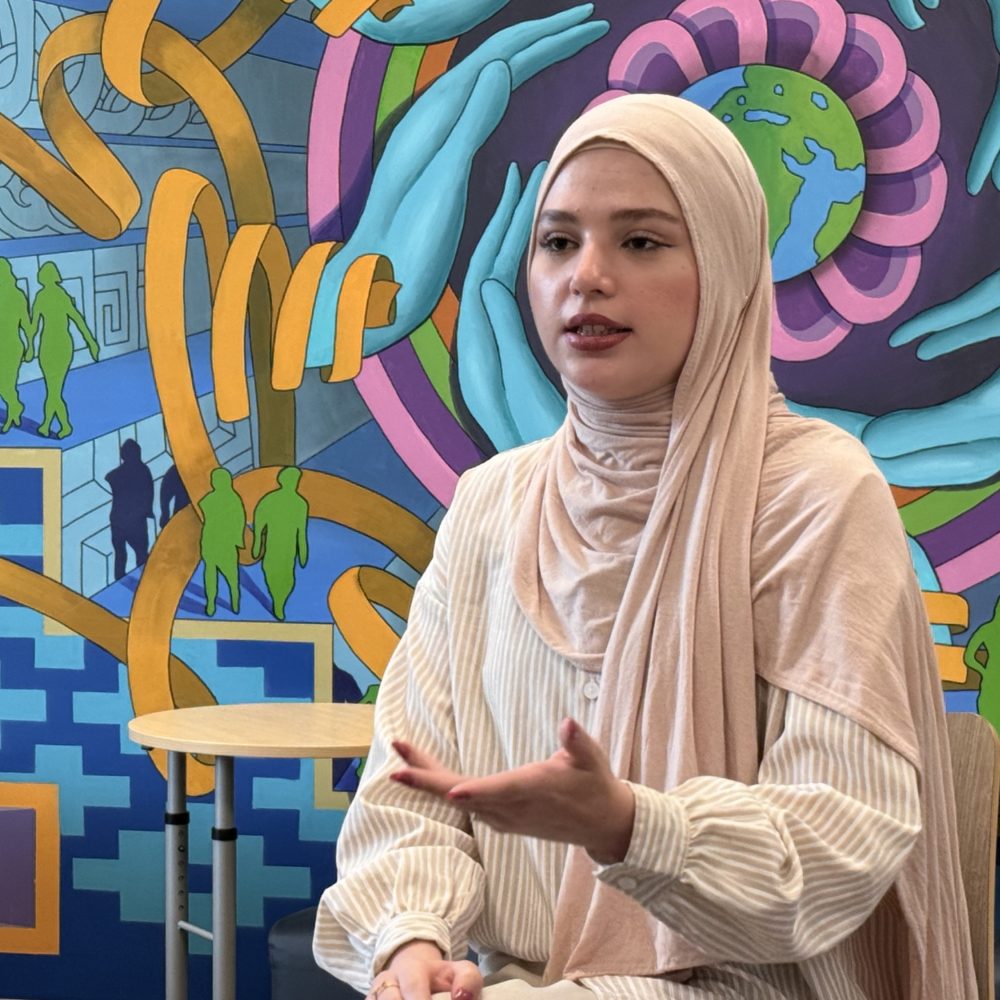
My name is Rayan Al Maguibi, and I am from Damascus, Syria.
My name was not supposed to be Rayan. It was supposed to be Marian. Just adding an M to my name. But then my aunt said the name Marianne doesn’t have a true meaning in the Quran. She said if we remove the M, it will be Rayan, which means a door in heaven that only people who fast can enter. I feel like that’s really a meaningful name.
I left Syria when I was seven years old. I have very limited memory from my childhood, and unfortunately, most of them were during the wars, so that affected a very huge part of my childhood. But one of my favorite memories was actually gathering at my grandma’s house during Eid, during Ramadan, just celebrating Eid and Ramadan and having food together and celebrating together. This memory brings me comfort about my childhood.
We are a big family. We are a family of seven. I have a twin sister. We don’t look alike at all. We are fraternal twins. I shared a room with my twin, so we had a lot of fights, but I love her. She is the one who understands me. As sisters, we are going through the same situation now, navigating life in the United States. But my younger brother also just has a special place in my heart too.
All of my immediate family are here in the United States, so I’m very, very thankful for this opportunity for me and my family to come all together. Navigating life in the United States is very hard, and doing it separated from your family would be even harder. So I’m very thankful we are together.
When I was 7, our family moved from Syria to Lebanon. When I first arrived in Lebanon, I did not know it because Syria and Lebanon looked exactly the same. We came to like a small town, and I said, are we here? And my family said, yes, we’re in Lebanon.
We lived in Lebanon for about 10 years. Eight of them were in a refugee camp, so it was quite a journey.
Living in a refugee camp almost feels like you live in a prison, because it's all about waiting.
It’s all about waiting for food, waiting for aid, waiting for a chance even to dream of a future. It was not the best experience a child or a teenager should experience, unfortunately. But it made me who I am today as a person. I grew up in the refugee camp. I lived all my teenage years there. I remember I used to write stuff on the tent, which was made of wood. We had a small mirror there. So I used to write “You’re beautiful” because I was a teenager. You know, as a teenager, you sometimes have little issues with accepting yourself and all of that. Now I wonder if the people who live in the tent that we lived in can still see it. I feel like part of me is still there. My family gets a little confused when I tell them that I actually miss the tent or the camp that we used to live in. They question how. But it was a home. At the end of the day, that was my home. I don’t miss the struggle, but I just miss the feeling because it gave me that feeling of a home. That really matters.
One random day we got a call. I think it was the IOM, or basically people who help refugees resettling in a different country, and they were asking us if we are interested in coming to the United States. Of course we said yes, and they started working on our process of us coming to the United States. We finally did so in September of 2023.
When we came to the United States we started building a life again from zero. It can be hard, but still, I believe this is one of the best starts to happen in my family because you get a lot of opportunities, and those opportunities are equal for everybody.
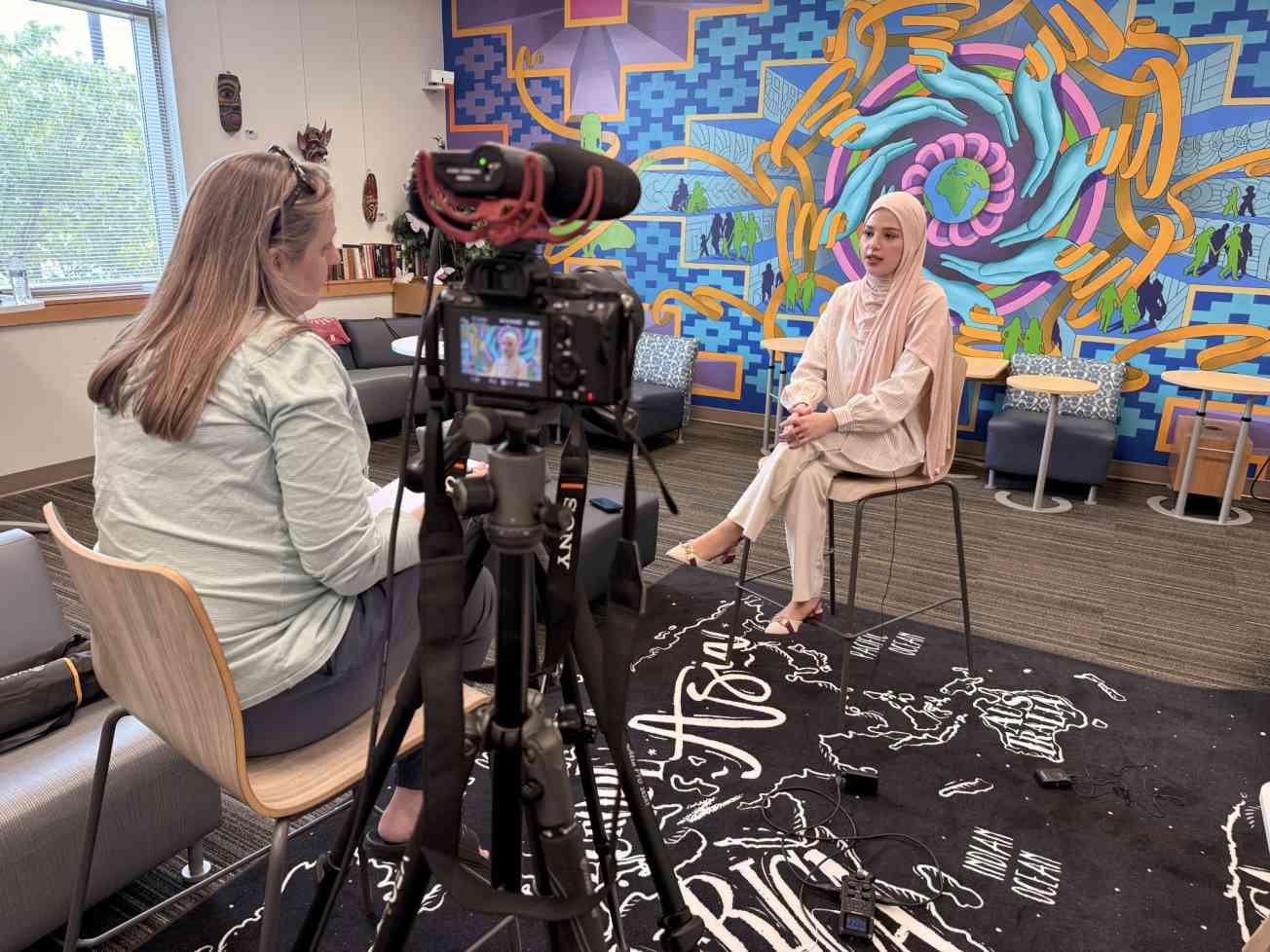
Coming to the United States was both exciting, but also I was scared. Everything felt unfamiliar: the food, the places, even crossing down the street felt overwhelming. But I remember loving where we lived, loving the community. One of the funniest things that happened on our first day in the United States was that we went to Walmart to grab food and snacks, and the manager knew that we just came to the United States. She offered me a job, which was really funny because I just came here like two hours ago! I was like, oh my God, the job market is really not hard. (I was wrong!) I was 19 years old.
I ended up getting a seasonal job. After the season, they don’t really keep all the people. So after that I was jobless for six months, and I thought oh my god, I need to find a job as soon as possible because I was the only English speaker in my family, and everything went through me. In fact, me and my brother were the first ones who got jobs. So we were supporting the family financially.
I learned English in Lebanon. I was actually in school there, and they have an English education system. I really loved going to school there. We did have some issues with a little bit of discrimination here and there as Syrian refugees living in Lebanon. Most of my experiences were really nice. But I think discrimination is a challenge that every refugee or immigrant faces.
When I got to the US, I started practicing my English, and it just got better and better each day.
When I got here, Frederick Community College was the first community I got introduced to. I got my GED here, and I was eager to learn, eager to find opportunities, eager to feel heard. Frederick Community College gave me that. It gave me all the help and all the opportunities to build my future and start my advocacy journey. I felt seen.
Being seen and heard is a very powerful feeling.
I’m excited about my future. I think about it every day, every minute. I am a hardworking person, and I can see that this is going to get me somewhere, especially with the help of the community. I have a lot of plans. I am working towards the nursing program. I want to be a dermatology nurse practitioner, and also volunteer abroad because I feel like healthcare in the refugee community is not taken that seriously. So that is one of my plans. And someday, I hope I get the chance to speak at the United Nations.
If you want to help refugees, help us feel like we belong by listening to us and valuing our opinion. This small act, the kindness–it does more than you think.
I want people to see me as a human being, not the label of refugee. Being a refugee is part of my story, but that’s not my whole story. Refugees are not less, less capable, less educated, or less deserving, or without skills. We’re just human beings. Being a refugee was not a choice.
For example, one of the things that maybe people don’t know about me is that I enjoy listening to music a lot. Actually, I’m going to attend my first concert ever soon. It’s one of my favorite bands! They’re called BTS, which is a Korean band that I really admire, and they’ve been with me through all the hardest times. The community has been with me since I was a teenager, just a little girl living in a refugee camp that didn’t know what to do. They’ve played a really important part of my story, and I’m so excited to see them for the first time.
I love the word “Home”. I feel like it brings me so much comfort. I’ve been searching for home my whole life. I came to a realization that home is belonging, no matter where you are. I thought home is one place, you know. But it’s just the feeling where you belong, where you feel heard, heard, where you feel seen. So Syria is a home for me, but also there’s a lot of places that give me that feeling. I have multiple homes, and I’m really proud of that.
Our team members obtain informed consent from each individual before an interview takes place. Individuals dictate where their stories may be shared and what personal information they wish to keep private. In situations where the individual is at risk and/or wishes to remain anonymous, alias names are used and other identifying information is removed from interviews immediately after they are received by TSOS. We have also committed not to use refugee images or stories for fundraising purposes without explicit permission. Our top priority is to protect and honor the wishes of our interview subjects.
