Why We Flee: Going to Libya was Hell
I said, “God, OK, if today is my last day, let it be.”
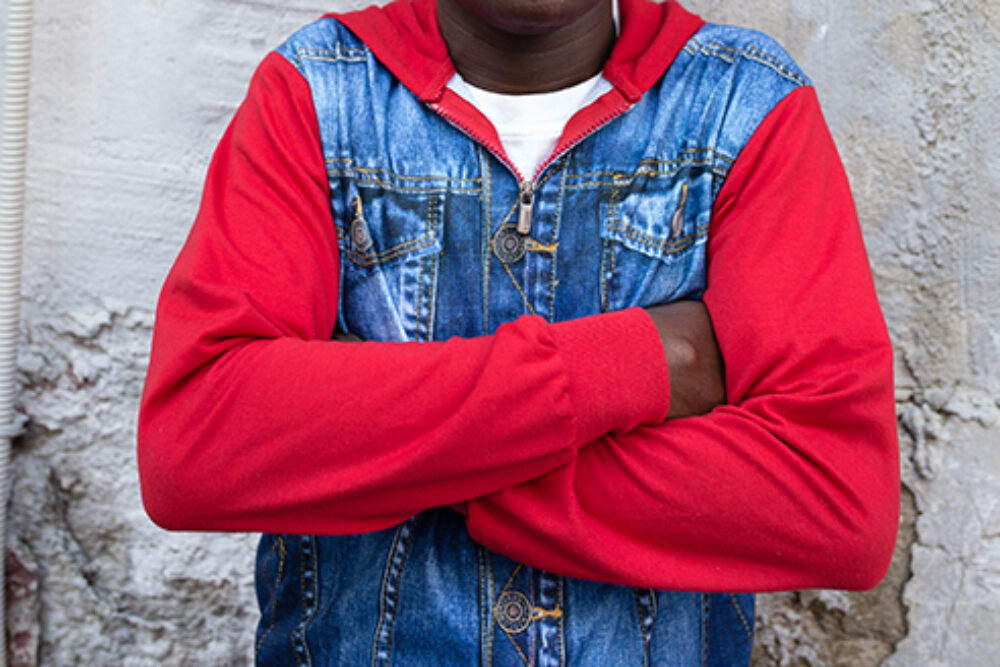
I left my country because I lost someone very close to me and I lost my job. I was having a psychological problem. My friend told me he had some money and that I should go follow a troop of boys to Libya.
Getting to Libya was a hell. In the middle of the night, two men on bikes came through the front door and started shooting sporadically.
There were twenty-four of us. Eight died, and some sustained injuries. For two days we hid together. We were even drinking our own urine.
We were able to move to a transit camp called Duruku. We lost more people in the desert, but six of us made it through there to Sabha, Libya. There was more shooting there in the middle of the night. A whole family was kidnapped, but they left us. Most of us had injuries.
When I got to Tripoli, I was able to find a temporary job at an Egyptian bakery, but then I had problems. Libyan soldiers occasionally came and picked us up to take to their barracks. They asked me to squat, cover my ears, and jump up and down. They forced me down and took my clothes off. One of them wanted to rape me in the hall where they keep ammunition. I shouted, and one of his colleagues came and asked him to stop.
I talked to some other boys from my country; we decided to cross the sea to Italy. When I saw the sea, I didn’t want to go. I could swim only a little.
My friends encouraged me and said they would cover my eyes. I thought I would die. I said, “God, OK, if today is my last day, let it be.”
I have been here in Italy two months. I am calming down. I have confidence that if I go to bed nobody will break the door and if I am sick I will get medicine. I move freely and feel secure. My thinking is no longer harsh or negative.
Our team members obtain informed consent from each individual before an interview takes place. Individuals dictate where their stories may be shared and what personal information they wish to keep private. In situations where the individual is at risk and/or wishes to remain anonymous, alias names are used and other identifying information is removed from interviews immediately after they are received by TSOS. We have also committed not to use refugee images or stories for fundraising purposes without explicit permission. Our top priority is to protect and honor the wishes of our interview subjects.