A Career Pathway and a Safe Place to Work
While you're working, you feel safe.
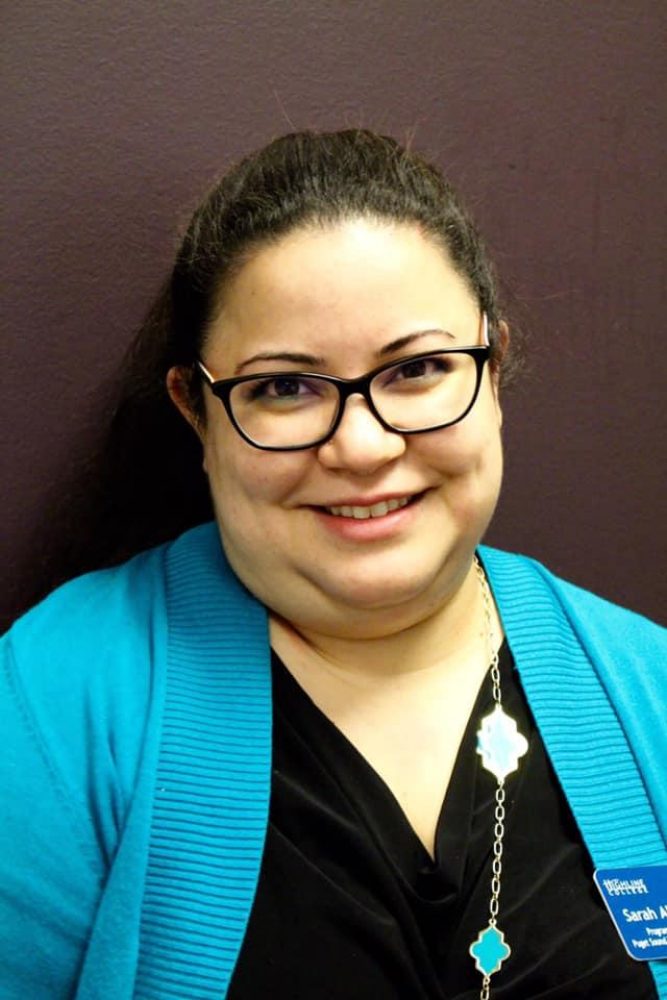
During the 2003 Iraq War, Sarah fled Iraq to Jordan. She met her husband there and completed pharmacy school. The couple returned to Iraq but left the country a second time when conditions again became too dangerous. As a licensed pharmacist, Sarah hoped it would be relatively simple to find a job in her field when she arrived in the States.
“When first I arrived here, I was hoping finding employment would be easy for me since I’m educated, a professional pharmacist. I started going from pharmacy to pharmacy offering my service, paid or unpaid. I was willing to work mornings, evenings, night shifts, weekends, or holidays. Unfortunately, I didn’t find a lot of people who understood which foreign degrees work here.”
It wasn’t until Sarah was introduced to the Welcome Back Center at Highline College and was instructed on how to obtain the proper certifications, that she could find work in her field. Sarah still has a final law exam to pass, but she can now work in a pharmacy and do what she loves. The process has taken over six years, but she keeps smiling.
“Back home it wasn’t a great environment to work in. The area where I worked, it was dangerous. People don’t understand until you’ve lived it how you can work in a place where you don’t feel safe. Sometimes at work here they ask me, ‘Why do you smile a lot? You’re always smiling. Why is that?’ I tell them, ‘It is so great to work while listening to music or in a quiet area. While you’re working, you feel safe. Maybe you don’t understand that but it’s a big deal, believe me. In the hospital back home, where I worked — one day there was a suicide bombing inside the hospital. It was a horrible day. My husband was also working [in the hospital] and I couldn’t reach him. I was trying to call him. I couldn’t reach him. And then, when I went outside the hospital, I was crying, like, ‘Am I gonna to see him? How am I gonna see him? Am I gonna see him alive?’ And then, he called me [on the phone] and he said, ‘I can’t get out right now because I’m with a patient.’ [Before the bombing] he had left the operation room but they called him back. They paged him to go back for some reason, and thank God, they paged him back because if they didn’t, he would not be here today. So, that’s why I smile every day, because I’m talking about it right now. I’m not living it.”
Our team members obtain informed consent from each individual before an interview takes place. Individuals dictate where their stories may be shared and what personal information they wish to keep private. In situations where the individual is at risk and/or wishes to remain anonymous, alias names are used and other identifying information is removed from interviews immediately after they are received by TSOS. We have also committed not to use refugee images or stories for fundraising purposes without explicit permission. Our top priority is to protect and honor the wishes of our interview subjects.