Their Story is Our Story (TSOS) has arrived at Cox's Bazar, the world's largest refugee settlement
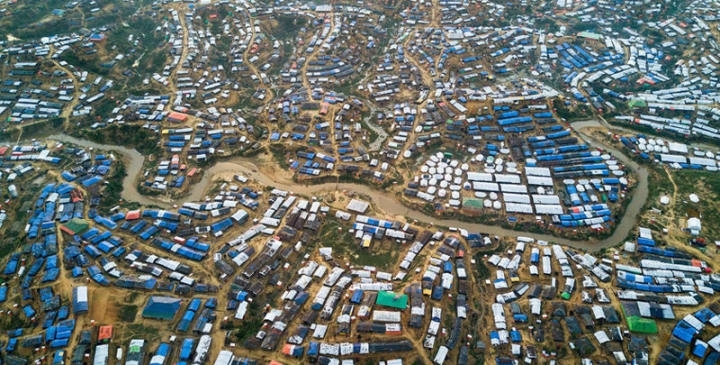
Their Story is Our Story (TSOS) has safely entered Bangladesh to gather the stories of some of the 725,000 Rohingya refugees who have escaped extreme violence in Myanmar and who now live in Cox’s Bazar - the largest refugee settlement in the world where, according to UNHCR, over half of the residents are children.
This week, we will be reporting our progress from the ground daily, including ways in which you can help.
Here, Melissa Dalton-Bradford, Executive Director, describes the arrival.
It’s not as hot as I’d planned for, but it is heavier.
There aren’t enough superlatives to reach to the edges of the scope or the depth of the despair of Cox’s Bazar here in southeastern Bangladesh. But those who are aware of this crisis recognize the camp where we’ve arrived today with two other members of Their Story is Our Story (TSOS) as the largest refugee camp in the world. Large is right. And crushing in its weight.
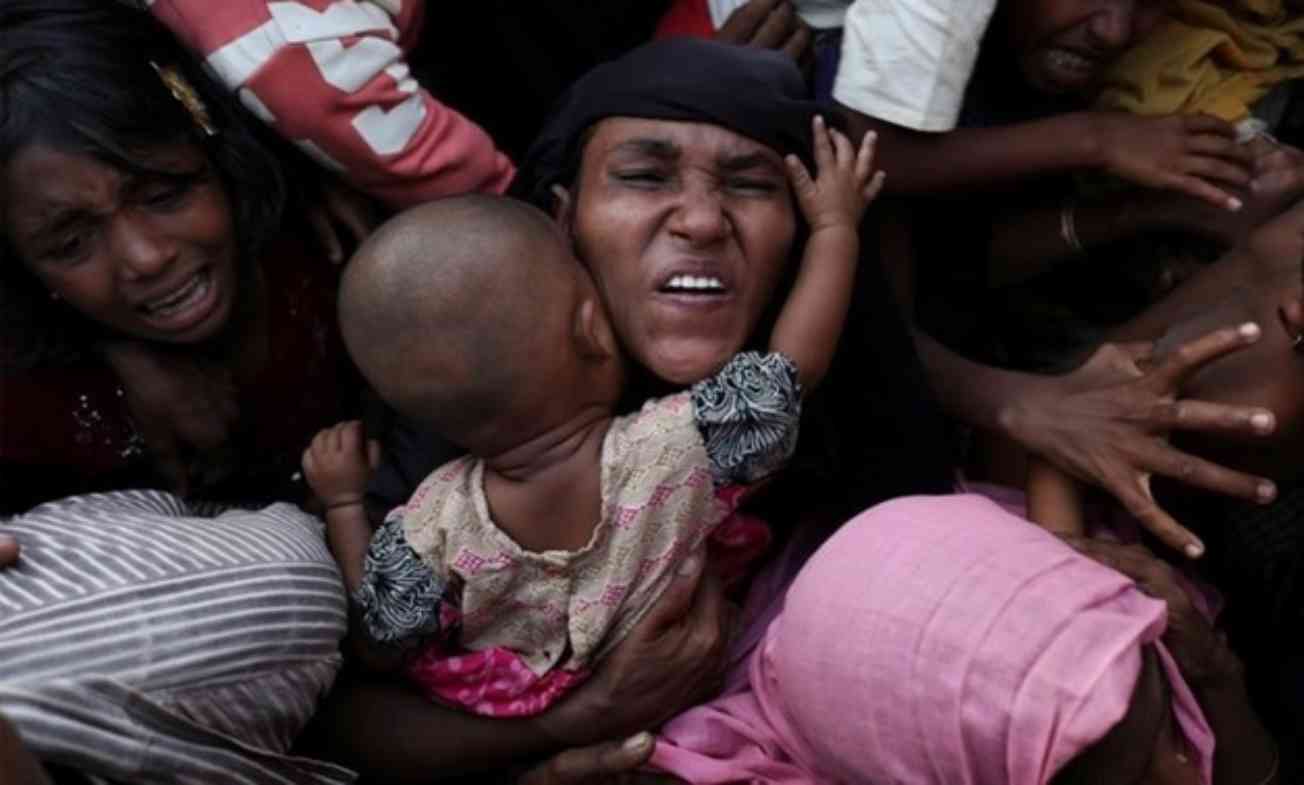
More than 700,000 Rohingya refugees have been living here since the summer of 2017 when Myanmar’s military forces drove them from their homeland. Homeland might be too generous a term, really, because the Rohingya people have long been denied the rights of citizenship and have, in turn, been systematically persecuted and tortured for their particular religious beliefs. As is always the case, that persecution and torture has been unleashed primarily on women, and it’s for those particular women—sexually assaulted, raped, shunned and traumatized—that we have come.
Christopher Mortier, our photographer who lives in Mulhouse, France, and Christian Suhr, our videographer from Berlin, Germany, and I made the seemingly endless four-connection trip from Frankfurt am Main, to Cox’s Bazar to meet our contact person from HumaniTerra, our NGO host, at our hotel. Charline Petitjean, who is (conveniently) French and a local worker with HumaniTerra met with us to walk us through the history of Rohingya in Cox’s Bazar, and laid out some of the cultural and security issues we might face, reminding us just how tense things have been in the camp recently. We will see what that means when we enter the camp and are guided to talk with doctor and midwives, surgeons and patients, mothers and children, Bangladeshi, Rohingyas, French, Brits, Americans, other Europeans...
All of this unrolls tomorrow. I’m getting ready by sinking into the deepest sleep possible. I’ll need to be rested to carry the next day.
Tomorrow, we will posting our second diary entry of our story-gathering trip to Cox Bazar, Bangladesh.
HOW YOU CAN HELP
Share refugee stories online and in life amongst your friends and colleagues to help challenge misconceptions and misunderstandings about refugees to aid integration and acculturation in communities.
Donate to Their Story is Our Story (TSOS) so that we can continue sharing refugees’ personal stories.
Donate to Hope Foundation for Women and Children of Bangladesh so that Hope Field Hospital for Women can continue to provide a safe haven for women and children inside the Refugee Camps.
Get involved with HumaniTerra by donating funds or volunteering to work on the ground to help rebuild the care system in a sustainable way.
Helping ITPs Succeed: Insights from Leading Support Programs
Partner Profile: No One Left Behind
Their Story is Our Story and No One Left Behind (NOLB) joined forces in 2025 to launch the StoryShield program.
We spoke with Matthew Marcellus, Director of Communications with NOLB, and asked what the partnership with TSOS has meant for his organization and their Afghan clients.
Context with Layma
Social media presents us with an endless scroll of headlines and ‘hot takes’. What’s often missing is context. What is the history that led up to an event? Whose interests are served by a certain policy? What effects is that policy having on people’s lives? Layma Murtaza produces and hosts the video series “Context with Layma”, featured on Their Story is Our Story’s social media channels. We spoke to her about the context of her own life, as an Afghan-American and a professional in humanitarian aid, that led her to use storytelling to illuminate the personal and political context behind the headlines.