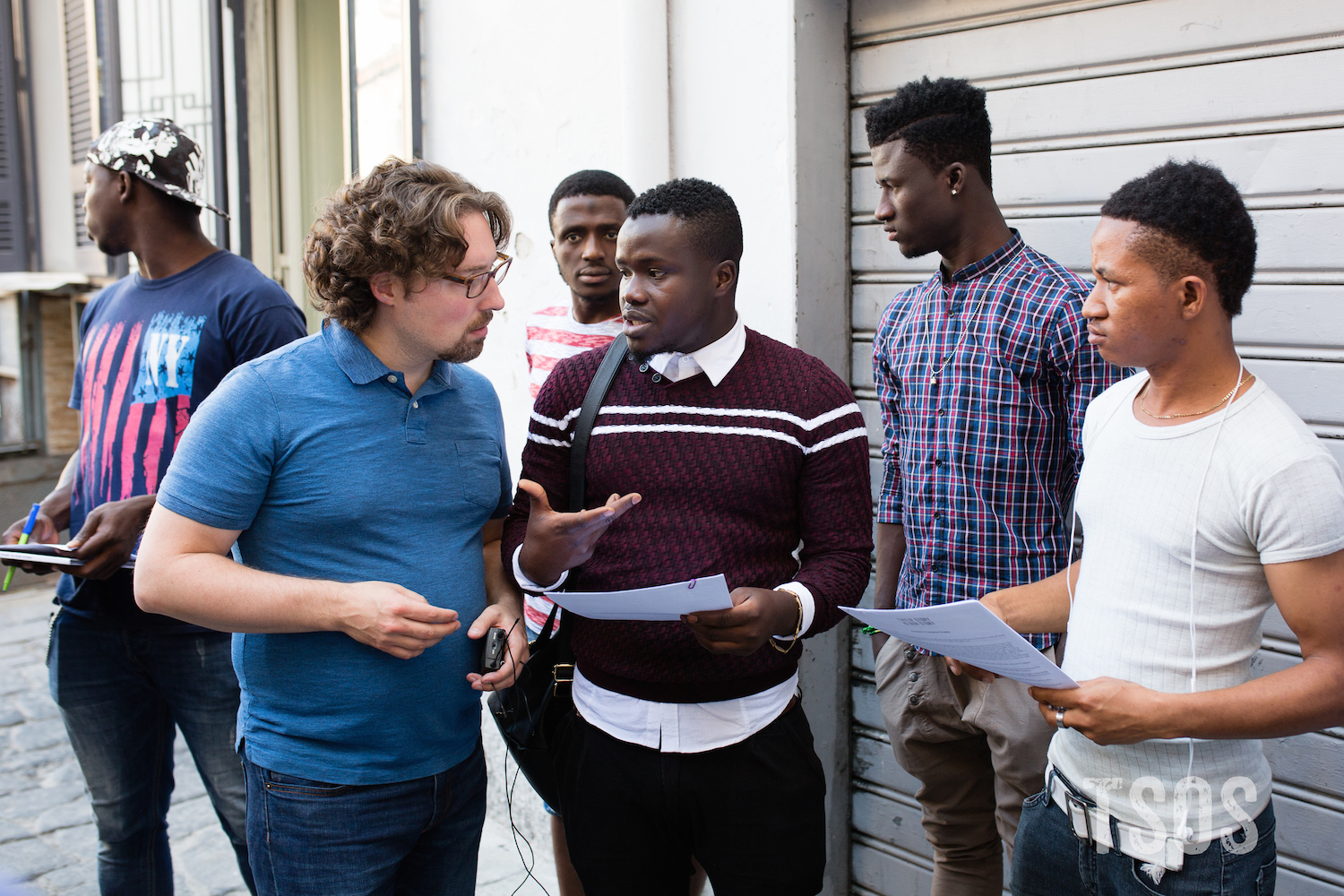
Written by Matthew Longhurst
I am a third-generation resident of Western Washington state. My grandparents (both sides) moved here in the 1950s, uprooting their families after a handful of previous generations had set down roots in Utah and eastern Idaho. Before that, most of my lineal progenitors migrated to this country directly from their homelands across northern and western Europe: England, Switzerland, Denmark, and Sweden. My family history is a tapestry of migration.
As I have learned more about my family history it has become clear that I am the product not just of immigrants, but of refugees. Whether their persecutions were religious, economic, social, or natural, many of my ancestors were uprooted in fear and turmoil. For me, the refugee crisis of the last several years has closely coincided with a growing knowledge of and a strong sense of connection to my forebearers. My ancestors’ life experiences echo the stories of so many whose stories we’ve shared over the last two years.
In the same way that my life and prosperous circumstances were made possible by so many sacrifices over many generations, I hope that today’s refugees will be able to create a future of possibility for themselves and their children. However, one look around reveals that they must combat suspicion, distrust, and even xenophobia and racism in heavy doses no matter where in the world they land. I cannot help but feel a strong sense kinship and an obligation to help where I can.
This is the reason I help to tell their stories.
Helping ITPs Succeed: Insights from Leading Support Programs
Partner Profile: No One Left Behind
Their Story is Our Story and No One Left Behind (NOLB) joined forces in 2025 to launch the StoryShield program.
We spoke with Matthew Marcellus, Director of Communications with NOLB, and asked what the partnership with TSOS has meant for his organization and their Afghan clients.
Context with Layma
Social media presents us with an endless scroll of headlines and ‘hot takes’. What’s often missing is context. What is the history that led up to an event? Whose interests are served by a certain policy? What effects is that policy having on people’s lives? Layma Murtaza produces and hosts the video series “Context with Layma”, featured on Their Story is Our Story’s social media channels. We spoke to her about the context of her own life, as an Afghan-American and a professional in humanitarian aid, that led her to use storytelling to illuminate the personal and political context behind the headlines.